
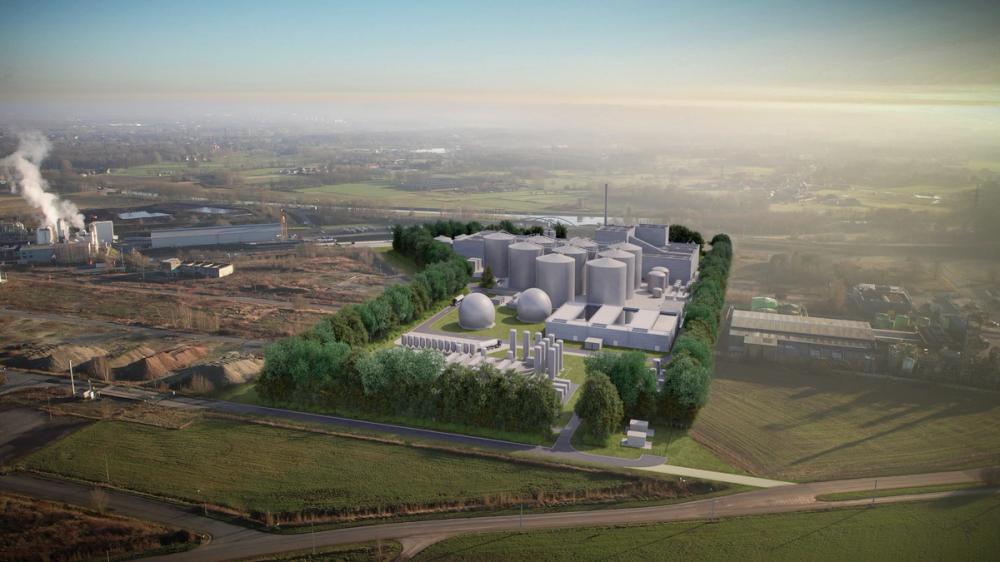
After more than two years of collaborative work with Walloon authorities and stakeholders to put together a robust application that met legal requirements, Biogas Hautrage submitted its permit application in the fall of 2025 for the biomethanation plant in the Tertre industrial zone. On June 18, the decision to deny the permit by technical officials and the delegate from Mons weighs heavily on the deliberations that CIP—Copenhagen Infrastructure Partners, one of the world’s leading investors in renewable energy infrastructure—will undertake regarding the continuation of its investments in Wallonia.
A Strategic Project for Renewable Energy in Wallonia
With a production capacity of 340 GWh, investments totaling over 200 million euros made without any request for sector-specific subsidies, and the 100 direct and indirect jobs it creates, Biogas Hautrage is now one of the most transformative industrial and environmental projects in Wallonia. In addition to its primary production of biomethane, the project aims to produce BioCO₂ and CE-marked organic fertilizers from agricultural effluents and agro-industrial residues. This circular economy project is strongly supported by the agricultural sector, which sees it as a genuine opportunity for its operations.
A Decision That Warrants Further Clarification
Upon reviewing the decision, numerous opinions issued by the expert bodies consulted as part of the procedure demonstrate that the project exhibits a high level of control and compliance with regulatory requirements. In fact, the vast majority of the opinions issued are favorable. The only unfavorable or qualified opinions from the SPW bodies have all received a response or clarification from the applicant, who is also prepared to accept the strict measures imposed to further reduce or mitigate the environmental impacts of its operations. It should be noted that the logistical feasibility of using waterways (the project will result in an increase in river traffic on the Nimy-Blaton Canal of approximately 17%), the project’s compliance with industrial safety requirements, the absence of major obstacles related to soil conditions, and the satisfactory management of project-related environmental externalities such as noise, odors, and traffic have all been acknowledged. “BGH precisely meets the objectives Wallonia has been pursuing for several years: producing renewable energy locally, reducing CO₂ emissions, strengthening its energy autonomy, and developing a high-performing circular economy. Despite this, we are facing a rejection whose justification seems unfounded to us. This decision raises questions about Wallonia’s genuine willingness to seize the opportunities available to it in terms of economic, energy, and agricultural development. It also sends a worrying signal to Walloon industries that have expressed concrete interest in biomethane as a means of decarbonizing their operations,” said Jakob Bergendorff, Managing Director.
Local Concerns That Appear to Have Tipped the Scales
The negative opinions come mainly from local stakeholders: municipalities, the IDEA intermunicipal association, and local residents. Despite significant efforts to ensure transparency, engage with residents’ representatives, and issue various communications to explain the ins and outs of the project to as many people as possible, their opinions remained opposed. Yet the project utilizes the best available technologies and is planned for a privately owned site that has been vacant for over 25 years, located within an industrial eco-zoning area. It is essential to emphasize that the operating conditions set by the various “key” advisory bodies are so strict that they undoubtedly address the concerns expressed by many worried local residents who spoke out during the public hearing.
What conclusions should we draw from this?
CIP does not dispute the high standards expected for an industrial project of this scale. The group is fully aware of its responsibilities and the challenges that such a project entails. “We have devoted considerable effort and made significant investments to put together a solid proposal, which has resulted in a large majority of favorable technical opinions. We have also taken care to firmly anchor the project in its local community, particularly by developing attractive partnerships with farmers in the region. Our bewilderment is all the greater given that recent energy and geopolitical crises have underscored the importance of strengthening our strategic autonomy. “If a project that would generate local renewable energy, create jobs, and contribute to the fight against climate change cannot move forward, what conditions must still be met to develop this type of initiative in Wallonia?” said Antoine Mathelot, Project Director for CIP.
Group Position
CIP takes note of this decision with all the seriousness it deserves. An in-depth analysis of the reasons behind the rejection will be conducted to assess whether it is appropriate to file an appeal with the Minister of Spatial Planning. However, if this analysis concludes that the likelihood of success is insufficient, CIP would be forced to reconsider continuing the project in Wallonia. In such a scenario, the planned investment of more than 200 million euros could be redirected to other regions that are more receptive to its implementation.